What are the Northern Lights?
It begins with a solar flare
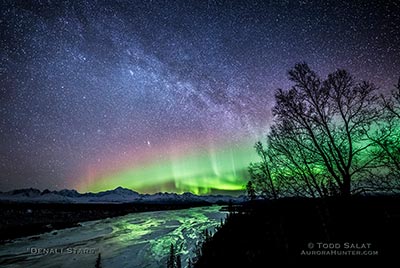
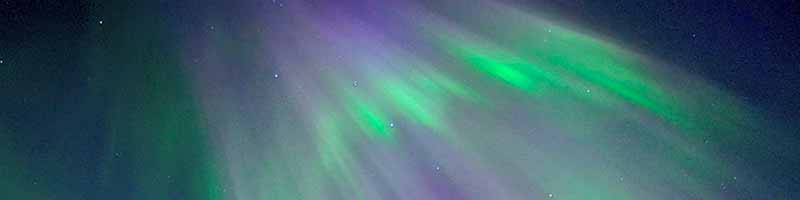
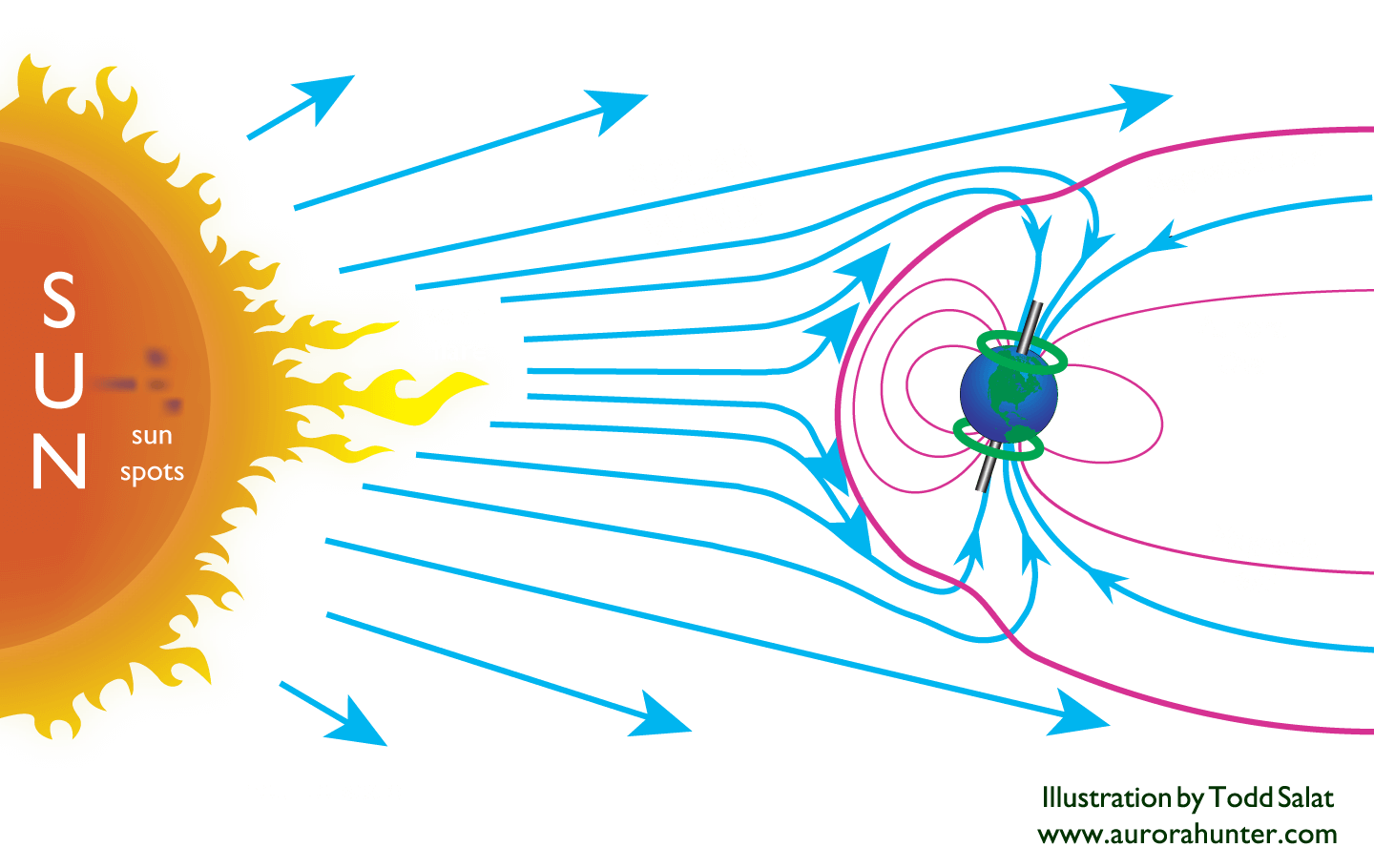
The aurora borealis (northern lights) form when charged particles emitted from the sun during a solar flare penetrate the earth's magnetic shield and collide with atoms and molecules in our atmosphere. These collisions result in countless little bursts of light, called photons, which make up the aurora. Collisions with oxygen produce red and green auroras, while nitrogen produces the pink and purple colors. This reaction encircles the polar regions of the earth and occurs at an altitude of 40-400 miles (65-650 km) in a zone called the “Auroral Oval.”
When & Where
The aurora borealis most commonly occur between 60°-75° latitude, but during great geomagnetic storms the auroral oval expands equatorially and can reach 30° latitude or further. In the northern hemisphere they are called the aurora borealis (northern lights) and in the southern hemisphere aurora australis (southern lights).
An auroral display might be observed any night from dusk until dawn as long as it is dark, which excludes Alaskan summer nights (May-July). The best time to view them is between midnight and 2 am.